Travel should be comfortable, respectful, and accessible for everyone. Condor understands that some passengers may need extra support due to mobility limitations, medical conditions, age, or other special requirements. That’s why Condor offers a structured and caring Special Assistance program designed to make every stage of your journey smoother — from booking your ticket to arriving at your destination.
Whether you need wheelchair assistance, medical device support, sensory assistance, or help during boarding, Condor aims to ensure you feel safe, confident, and well cared for throughout your trip.
This comprehensive guide explains services, booking steps, rules, mobility device policies, and new accessibility trends.
Overview of Condor Wheelchair & Special Assistance
Flying should be comfortable, safe, and stress-free for everyone — no matter your mobility needs. Condor understands this, which is why they offer comprehensive wheelchair and special assistance services for passengers who require extra support. This program ensures that from the moment you enter the airport until you reach your final destination, help is available every step of the way.
Whether you have a temporary injury, a chronic condition, are traveling as an elderly passenger, or are recovering from surgery, Condor makes sure you can move through the airport and board your flight safely and comfortably.
Key Features of Condor Wheelchair & Special Assistance
Full Airport Mobility Support
Condor provides manual wheelchairs at all airports they operate. Staff assist passengers:
- From the airport entrance to check-in counters
- Through security and immigration checks
- From boarding gates to the aircraft
- Post-landing, from the aircraft door to baggage claim or the exit
This full coverage ensures you never have to navigate the airport alone if you need help.
Priority Pre-Boarding & Boarding Assistance
Passengers who need support are often allowed to board before other travelers. Benefits include:
- Use of aisle chairs to navigate narrow aircraft cabins
- Assistance from wheelchair to aircraft seat
- Extra time to get settled in the cabin
This reduces stress and allows you to start your journey comfortably.
Trained, Caring Staff
Condor’s airport and in-flight personnel receive specialized training to provide assistance safely and respectfully. Staff are skilled in:
- Moving passengers securely from wheelchairs to seats
- Handling mobility devices with care
- Guiding passengers through busy airports
- Communicating patiently and respectfully with travelers with disabilities
Passengers can trust that the support they receive is both professional and empathetic.
Post-Landing Assistance
Assistance doesn’t stop when the plane lands. Condor ensures:
- Wheelchairs are available for disembarking
- Staff help with transfers to airport exits, lounges, or connecting flights
- Safe handling of mobility devices and medical equipment
Passengers can relax knowing help continues until they reach their destination safely.
No Extra Charge for Standard Wheelchair Services
All standard wheelchair support is provided free of charge, making it accessible to all travelers who require assistance.
Support for a Wide Range of Passengers
Condor’s services are not limited to passengers with permanent disabilities. Assistance is available for:
- Elderly travelers
- Passengers with temporary injuries or fractures
- Individuals recovering from surgery
- Travelers with chronic mobility limitations
Every passenger’s experience is personalized based on their specific needs, ensuring a stress-free journey.
Inclusive & Accessible Experience
Condor prioritizes dignity and independence, aiming to make every airport experience smooth, safe, and comfortable. From check-in counters to boarding gates, their team works to remove barriers so that mobility challenges do not affect your travel plans.
Facilities Provided Under Condor Special Assistance
Condor Airlines goes beyond basic support to ensure passengers with reduced mobility, temporary injuries, or special needs have a stress-free and comfortable airport experience. From pre-booking to arrival, every stage is carefully planned to provide assistance tailored to each traveler’s needs.
Pre-Booking & Advance Planning
Planning ahead makes your journey smoother. Condor encourages passengers to request assistance as early as possible:
- During online booking or through the “Manage Booking” portal
- By contacting customer service via phone or email
Why it matters: Early notification — ideally at least 48 hours before departure — ensures the airline can:
- Arrange the correct mobility equipment (manual or electric wheelchairs)
- Allocate trained staff for personalized support
- Prepare for special requirements, such as oxygen devices or CPAP machines
Passengers with battery-powered devices may need to complete medical forms in advance, helping Condor verify safe handling and comply with airline safety standards.
Pro Tip: Always mention if you’ll be using a personal wheelchair or mobility device — this helps the airline prepare proper handling and storage during your flight.
Airport Wheelchair Services
Condor provides continuous wheelchair support at most airports it serves:
- Wheelchairs are available at check-in counters and assistance desks
- Staff help passengers navigate from terminal entrances to boarding gates
- Wheelchair support continues up to the aircraft door
- Upon arrival, assistance is provided from the plane to baggage claim or exit
This uninterrupted support minimizes stress and ensures a seamless airport experience, particularly for elderly passengers, travelers with injuries, or those using assistive devices.
Trained Support Staff
Condor’s team is highly trained to provide safe, respectful, and efficient assistance:
- Handling passengers securely and assisting with transfers
- Guiding travelers through crowded terminals and security checks
- Operating mobility devices and aircraft aisle chairs safely
- Communicating clearly and patiently with passengers who have disabilities
Focus: Safety, dignity, and comfort. Staff are trained to anticipate needs, giving passengers confidence and peace of mind throughout the journey.
Trending Tip: Condor has introduced refresher training modules on inclusive airport assistance, including sensitivity training for travelers with cognitive or developmental disabilities.
Boarding & Deplaning Assistance
Passengers requiring special assistance receive priority boarding to ensure they are settled comfortably before the main boarding process begins. Services include:
- Use of aisle chairs in narrow aircraft cabins
- Assistance from wheelchair to assigned seat
- Support during deplaning after landing
- Special attention on long-haul aircraft like the Airbus A330neo, where cabin design improves accessibility, space, and comfort
Extra Tip: Passengers traveling on long-haul flights can request aisle seats near lavatories or exits for easier movement and quicker boarding.
Airport Accessibility Features
Condor collaborates with airports worldwide to offer facilities that make travel inclusive and convenient:
- Elevators and ramps for easy access between terminals
- Accessible restrooms and family facilities
- Dedicated assistance counters for special needs
- Reserved parking for travelers with reduced mobility
- Accessible security screening areas for a smoother process
Note: Accessibility features may vary depending on airport size and location, so passengers are encouraged to check in advance and coordinate with Condor for specific support requirements.
Personalized Mobility Support
Beyond general facilities, Condor provides customized assistance for individual passenger needs:
- Guidance through check-in, security, and boarding
- Support with connecting flights and navigation within terminals
- Assistance with medical devices, oxygen tanks, or CPAP machines
- Help with assistance animals, ensuring compliance with airline and international regulations
Passengers can expect a personal touch, with staff available to make adjustments and answer questions at any stage of travel.
Rules & Regulations for Condor Special Assistance
Condor Airlines is committed to providing safe, comfortable, and dignified travel for passengers with reduced mobility or special needs. To ensure assistance runs smoothly, it is important to understand the airline’s rules, documentation requirements, and passenger responsibilities.
Advance Request Requirement
Passengers must request wheelchair or special assistance at least 48 hours before departure. This advance notice allows Condor to:
- Arrange trained staff for your specific needs
- Reserve appropriate mobility equipment such as manual or electric wheelchairs
- Ensure smooth coordination with airports and connecting flights
Last-Minute Requests: While Condor may attempt to accommodate urgent requests, availability cannot always be guaranteed. For example, during peak travel seasons, pre-booking is even more critical to secure support.
Tip: Include any special requests during booking, such as aisle seats, lavatory proximity, or assistance with luggage.
Documentation Requirements
Most passengers do not need a medical certificate for standard wheelchair assistance. However, documentation may be required if:
- Traveling with electric wheelchairs or mobility scooters
- Carrying medical oxygen or other life-supporting devices
- Using specialized medical equipment, like CPAP machines or portable oxygen concentrators
- Managing complex or chronic medical conditions that affect mobility
Pro Tip: Keep scanned copies of any required documents in your email or mobile device for quick verification at the airport.
Passenger Responsibilities
To ensure seamless assistance, passengers should:
- Arrive 2–3 hours early for check-in and security
- Clearly communicate your mobility needs to staff
- Provide battery information for electric wheelchairs, including type (gel, lithium-ion, or dry-cell), weight, and any handling instructions
- Carry medical documents if using specialized equipment or oxygen
Passengers are encouraged to stay in regular communication with Condor if their mobility needs change before travel. This allows the airline to make adjustments in advance.
Seating Guidelines
Condor prioritizes accessible and safe seating for passengers requiring assistance:
- Aisle seats may be assigned for easier boarding and movement
- Seats near lavatories may be provided if available
- Emergency exit rows are not permitted for passengers requiring assistance
- Seat allocation depends on aircraft layout and availability
Insider Tip: If you have specific seating preferences (e.g., closer to the front of the cabin for quick boarding), inform customer service at the time of booking or during pre-flight assistance arrangements.
Additional Safety Considerations
- Assistance staff are trained to handle wheelchairs, mobility devices, and medical equipment safely
- Passengers with electric mobility devices should ensure batteries are fully charged and properly labeled
- Condor staff follow strict safety protocols during boarding and deplaning, especially on narrow-aisle aircraft
- Assistance may include help navigating crowded airports, passing through security, and connecting flights
Types of Condor Airlines Special Assistance
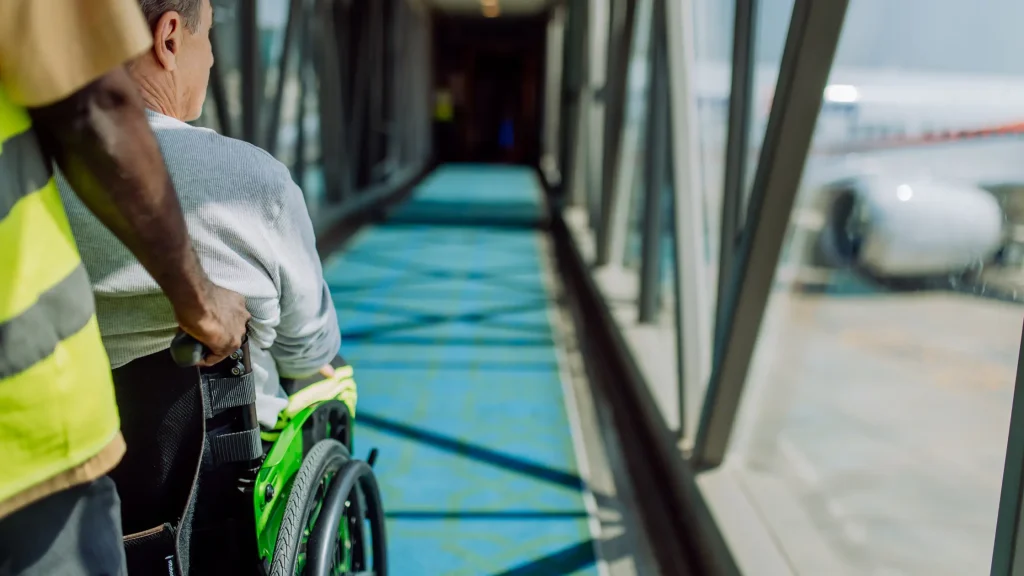
Condor Airlines is committed to making air travel accessible, safe, and stress-free for passengers with mobility challenges, sensory impairments, medical needs, or special requirements. The airline provides a variety of assistance types tailored to individual needs.
Wheelchair Assistance Codes (WCHR / WCHS / WCHC)
These standard aviation codes help Condor staff understand a passenger’s mobility level and provide appropriate support:
- WCHR (Wheelchair Ramp / Walk Short Distances)
- Passenger can walk short distances inside the airport and climb stairs, but requires assistance with long distances and airport navigation.
- Example: A passenger recovering from minor leg surgery who can walk slowly but needs help to the gate.
- Passenger can walk short distances inside the airport and climb stairs, but requires assistance with long distances and airport navigation.
- WCHS (Wheelchair Steps / Cannot Climb Stairs)
- Passenger cannot climb stairs and needs help from terminal to aircraft door.
- Example: A traveler using crutches or a wheelchair who requires a lift or ramp to board the plane.
- Passenger cannot climb stairs and needs help from terminal to aircraft door.
- WCHC (Wheelchair Complete / Cannot Walk at All)
- Passenger requires full assistance from the airport entrance to aircraft seat.
- Example: Individuals with severe mobility impairments or temporary paralysis, needing staff to escort them throughout the journey.
- Passenger requires full assistance from the airport entrance to aircraft seat.
Tip: Specify your wheelchair code when booking to ensure staff and equipment are ready in advance.
Visual & Hearing Impairment Support
Condor provides dedicated services for passengers with sensory disabilities:
- Guided Navigation: Staff can escort passengers through terminals, security, and boarding gates.
- Document Assistance: Help reading forms, tickets, or signage for visually impaired travelers.
- Communication Support: Assistance for hearing-impaired travelers through written instructions, visual alerts, or sign language support at select airports.
Pro Tip: Travelers with hearing impairments should inform Condor in advance to arrange visual announcements or alternative communication methods.
Cognitive & Developmental Disability Support
Passengers with cognitive or developmental challenges receive personalized assistance:
- Clear, step-by-step instructions at check-in, security, and boarding.
- Extra time during security screening to reduce stress.
- Dedicated staff to guide passengers calmly and patiently, ensuring understanding and safety.
Example: A passenger with autism or ADHD can benefit from one-on-one guidance and quiet boarding procedures.
Medical Equipment & Oxygen Support
Condor allows the use of certain medical devices onboard, with prior approval:
- CPAP machines for sleep apnea.
- Portable oxygen concentrators (POC) — approved models only.
- Mobility aids like walkers or collapsible wheelchairs.
Important: Some devices may require documentation or airline approval in advance. Electric wheelchairs must have labeled batteries and meet airline safety standards.
Assistance Animals
Passengers who rely on service or emotional support animals may bring them onboard, provided:
- Proper documentation and vaccination records are submitted in advance.
- Airlines and destination airports allow the animal on the flight.
Example: Guide dogs for visually impaired passengers or service animals for medical conditions.
Elderly Passenger Support
Condor prioritizes comfort and safety for senior travelers:
- Wheelchair assistance from check-in to boarding.
- Priority boarding to avoid crowds and reduce strain.
- Help navigating long terminals, reaching lounges, or connecting flights.
Child Mobility Assistance
Young travelers with limited mobility or temporary injuries receive:
- Assistance during boarding, seating, and deplaning
- Ensured safety and supervision while moving through the airport
- Coordination with guardians or accompanying staff
Bringing Your Own Wheelchair
Manual Wheelchairs
- Transported free of charge
- Folding wheelchairs may be stored in cabin (if space permits)
- Otherwise safely transported in cargo hold
Electric Wheelchairs
Transport depends on:
- Battery type (lithium-ion, gel, dry cell)
- Weight and size
- Proper documentation
Advance coordination is required.
Labeling Requirements
Mobility devices must include:
- Passenger name
- Battery handling instructions
- Safety labels
Proper labeling ensures safe handling.
How to Request Condor Special Assistance
Condor Airlines is committed to making air travel accessible, safe, and stress-free. To ensure you receive the right support, it’s important to request assistance in advance. Here’s a complete guide on how to do it:
During Booking
Passengers can request special assistance while booking online:
- Most Condor flight booking platforms include a “Special Assistance” or “Mobility Assistance” option.
- You can select the type of support you need, such as:
- Wheelchair assistance (WCHR / WCHS / WCHC)
- Visual or hearing impairment support
- Medical device assistance (oxygen, CPAP, etc.)
- Assistance for elderly passengers or children with mobility challenges
- Wheelchair assistance (WCHR / WCHS / WCHC)
- Tip: Always provide accurate details about your mobility limitations, medical equipment, or any special requirements. Early submission helps Condor arrange the correct staff, equipment, and seating.
Via Customer Service
If you didn’t request assistance during booking or need additional support:
- Contact Condor by phone or email. Phone support is generally the fastest method for urgent or complex requests.
- Provide the following details:
- Passenger name (as per passport/ID)
- Booking reference (PNR)
- Flight date and route
- Type of assistance required (wheelchair, oxygen support, assistance animal, etc.)
- Passenger name (as per passport/ID)
- Pro Tip: Mention any special equipment or medical devices, especially battery-powered wheelchairs or oxygen concentrators, to ensure proper handling and compliance with airline safety rules.
At the Airport
Condor provides special assistance counters at most airports, but last-minute requests are not guaranteed:
- Arrive at the airport 2–3 hours before departure to allow time for processing.
- Go to the special assistance desk or Condor help counter.
- Staff can confirm your request, provide a wheelchair if needed, and guide you through:
- Check-in
- Security and immigration
- Boarding and seating
- Deplaning at your destination
- Check-in
Airport Tip: While assistance is often available on short notice, pre-booking 48 hours in advance ensures smoother service, reduces stress, and guarantees equipment availability.
Conclusion
Condor Airlines’ Special Assistance program ensures that air travel is accessible, safe, and comfortable for all passengers, regardless of mobility limitations, medical conditions, age, or other special needs. From pre-booking to arrival, the airline provides personalized support, including wheelchair services, priority boarding, guidance for visually or hearing-impaired travelers, assistance with medical devices, and help for elderly or child passengers with mobility challenges.
By requesting assistance in advance and providing accurate details about mobility requirements or medical equipment, passengers can enjoy a seamless airport experience with trained staff ready to help at every stage of the journey. Condor’s commitment to dignity, safety, and accessibility makes it easier for travelers with special needs to move through the airport, board comfortably, and arrive at their destination with confidence and peace of mind.
FAQs—Condor Wheelchair Assistance
Yes, Condor gives help to people who need more support at the airport and when getting on the plane. They help with getting around the airport. They help people who cannot see or hear well. There is also help for travelers who need medical support while they go on their trip.
You can ask Condor for help with a wheelchair when you book your ticket. You can also talk to the Condor team for more help. It is smart to do this at least two days before you fly. This gives the airline time to get things set up for you.
Yes, Condor gives help to people with wheelchairs at the gate or when getting on the plane. You do not have to pay extra for this help.
Yes, Condor lets you take manual wheelchairs, electric wheelchairs, and tools that help you move. You have to tell them the size, how much it weighs, and what it uses for power before you fly. This helps them take care of it in the right way.
Yes, Condor gives priority boarding. The staff is there to help people who have trouble moving. They help these travelers get to their seats in a good and easy way.
Yes, Condor will let you bring electric wheelchairs. You need to let the airline know before you fly. They will ask what kind of power unit it uses, like dry cell, gel, or lithium-ion. They will want you to tell them how to take care of it during the trip.
If you need a doctor to look after your health or want oxygen while you are on a Condor flight, Condor might ask you for a Medical Information Form (MEDIF). Your doctor will fill out this form for you.
Yes, Condor will be there for you at every step of your trip. The team is with you during transfers. They help you get through security checks. They guide you to your next gate, too.
Condor says that you should get to the airport at least 2 hours before a short trip. If your trip is longer, you need to come 3 hours early. This will give you enough time if you have to get help for something.
At most airports, the people who are with you can go with you to the check-in counter. Sometimes, they can go to the gate with you. The Condor staff will be there to help you. They will help you get on the plane.
Read Also – Spirit Airlines Wheelchair Assistance, Finnair Special Assistance, Aer Lingus Wheelchair Assistance Services, Air India Wheelchair Assistance, Avianca Wheelchair Assistance, Condor Airlines Special Assistance, British Airways Special Assistance, TAP Portugal wheelchair Assistance, Volaris Wheelchair Assistance, Frontier Airlines Special Assistance, Turkish Airlines Special Assistance