Europe is calling! Whether you prefer the romantic cobblestone streets of Paris or the awe-inspiring ruins of Rome, signing up to be part of the “European no-passport” area is the first of many stepping stones on the way to your adventure. We, however, can also fully appreciate that the process of applying for a Schengen visa can sometimes be as confusing as arranging a puzzle. To apply for a Schengen visa, you need to be ready for strict procedures and the all-new digital border regulations, which will take effect in 2026.
The key to a stress-free visa application for the Schengen is accurate paperwork and an understanding of the constantly changing regulations. This friendly and easy step-by-step guide will take you through the whole Schengen visa application process. This will also solve your top questions, give you some insider info, and help you with a lot of other things.
What is a Schengen Visa?
A Schengen visa is a short-term visa that lets foreign nationals travel freely within the Schengen Area for up to 90 days in every 180-day period. Schengen visa is designed for short trips, like for leisure, for short periods of business, or for family visits. A large percentage of the border system is dependent on automated digital checking systems for monitoring the movement of passengers. This is, therefore, the absolute minimum that you must have for any European holiday abroad, a valid and complete authorization that fully satisfies local laws.
Types of Schengen Visa
An application for a Schengen visa may fall into one of these three main functional categories depending on the nature of your travel and on the reasons for your travel.
- Type A (Airport Transit Visa): This is a very specific visa that enables citizens of certain countries outside Schengen to pass through the international transit areas of European airports without entering the country legally. This is a requirement for the people who have a connecting flight at any European airport and whose final destination is some other country.
- Type C (Short-Stay Visa): This is used by visitors from around the world. The Type C permit is valid for visits for tourist purposes, business meetings, short-term training seminars, or visits for family reasons. It may be issued as a single, double, or multiple-entry permit, depending on your travel history.,
- Type D (National Long-Stay Visa): Those who intend to pursue their education, work, or permanent residence in a targeted European country for more than 3 months completely bypass the short-stay Scengen visa application process. Or they can apply for a national long-stay visa specific country.
How to prepare for a Schengen visa application?
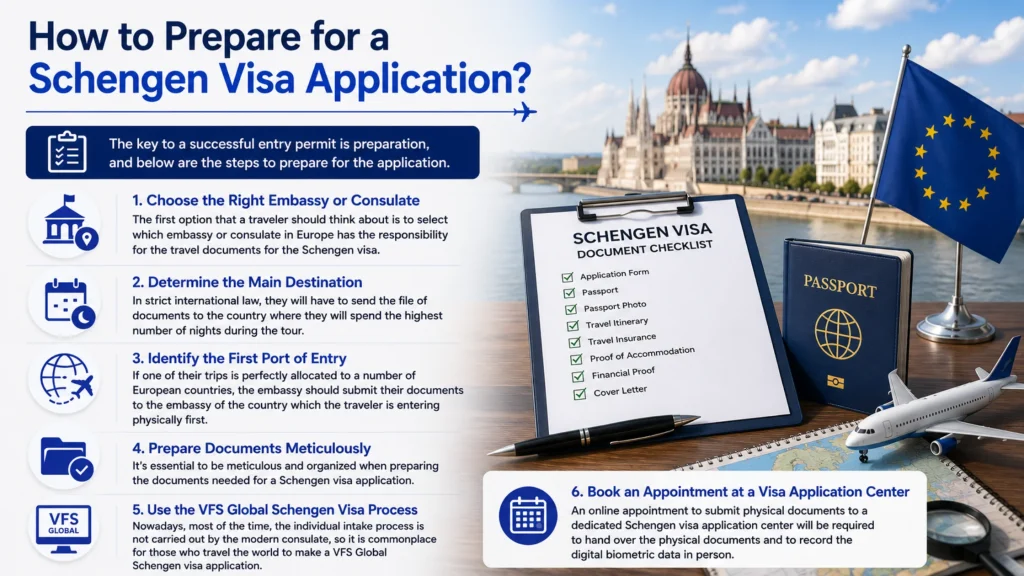
The key to a successful entry permit is preparation, and below are the steps to prepare for the application.
- The first option that a traveler should think about is to select which embassy or consulate in Europe has the responsibility for the travel documents for the Schengen visa.
- In strict international law, they will have to send the file of documents to the country where they will spend the highest number of nights during the tour.
- If one of their trips is perfectly allocated to a number of European countries, the embassy should pass on the documents.
- It’s essential to be meticulous and organized when preparing the documents needed for a Schengen visa application.
- Nowadays, most of the time, the individual intake process is not carried out by the modern consulate, so it is commonplace for those who travel the world to make a VFS Global Schengen visa application.
- An online appointment to submit physical documents to a dedicated Schengen visa application center will be required to hand over the physical documents and to record the digital biometric data in person.
Read Also: – How to Track Delta Flight Status in Real Time
What are the required documents?
The applicant will only be eligible to travel if they present the below documents:
- The most important part of the package is the actual Schengen visa form. The standardized fields of this form are crucial for consulates to gauge the suitability of their applicants, so data accuracy on this form is essential.
- Travellers can find and fill out a Schengen visa application form online without any hassle from the relevant consular website of their main country of residence.
- The benefit of doing the Schengen visa application form online is to avoid any manual entry errors and speed up the application process.
- If a Schengen visa embassy website unexpectedly has a technical issue, however, the traveler needs to download a blank Schengen visa application form PDF to use a physical copy to complete the application.
- Remember that each European country may have very particular document requirements depending on the region; for example, if you are traveling to Rome, the traveler would need to complete the special application form for the Schengen visa to be able to get it.
- They would need to submit a professional Schengen visa application letter alongside the forms. This is a detailed document that specifies exactly what they are traveling for and assures them that they will get out of the zone on time.
- A properly descriptive letter of application for a Schengen visa serves as your own voice in front of the official of the visa application service, so it fills the logistical gap between you and the visa official, if any.
Cost of the application
The usual, basic visa application fee for adults is €90, and for minor children aged 6-12, it is €45.
- But the overall Schengen visa application fee will certainly rise as the traveler adds the transactional fees from third-party processing networks.
- If someone is going to apply for a VFS Global Schengen visa, they must pay a separate ‘service handling fee’ from the base application fee for a Schengen visa.
- The final out-of-pocket Schengen visa application cost will ultimately depend on your choice of “convenience.”
- Options like automated text alerts, premium waiting lounges, and secure express passport courier shipping or getting an audit of the documents beforehand with professional Schengen visa application services.
Dates and timeline
In managing the travel arrangements, perfect timing is the crucial one.
- Typically, the application time for the standard Schengen visa is between 15 and 30 calendar days after the physical submission of the visa application to the embassy’s desk.
- During summer or winter seasons, it can take long due to the high number of applicants.
- It is important to give yourself a realistic and highly conservative timeline to apply for a Schengen visa so as not to cause anxiety at the airport upon arrival without the passport.
- The traveler must submit the files within 6 months from the date of departure.
- They can check the location of the passport with the secure Schengen visa application online tracking systems to keep themselves updated with the file’s movement in the administrative queue without worrying.
- The applicants can get real time updates on the application by the Schengen visa online portal.
What is the process if someone is applying from abroad?
If you are applying for a Schengen visa as a non-US citizen, for instance, the traveler should have clear legal documents to demonstrate that they have an extended visa status in the USA, such as a Green Card or an active employment visa.
In addition, the regional documentation needs are very specific to each destination country.
- Portugal: While a Portugal Schengen visa application places a relatively mild demand on the provision of the hotel accommodation receipts, it is significantly more important to provide fully prepaid, non-cancelable hotel accommodation receipts instead of basic, unconfirmed holding reservations.
- Poland: The policy should not have any deductibles, and it should be written from the start for the applicant’s travel medical.
- Sweden: This is very focused on proving the traveler’s financial ability. To meet the strict Nordic public funds guidelines, one needs to present an easily traceable source of personal income as part of your visa application Sweden schengen. The visa application to Sweden Schengen will need to demonstrate a consistent and stable balance to show that the traveler can afford to cover the costs of living in Sweden.
- France: Given that it’s among the top cultural tourist destinations in the world, one needs to book the biometrics appointment well ahead of time in France, given the extremely high demand for limited slots globally!
How to make Schengen Visa Itinerary
The travel itinerary is the cornerstone of the trip that tells the visa officer how the traveler is traveling and why their European trip is necessary.
- One of the most common grounds for a fast denial is if the applicant has an unclear, whimsical, or contradictory timeframe when preparing a Schengen visa application.
- They have to verify that the whole sequence of dates, locations, and links in transit match exactly with the applicant’s flight reservations and hotel bookings.
- This ensures that the authorities are convinced you’re a regular tourist and not an irregular migrant.
- In case the tourist is planning to enter through popular borders, like planning a Schengen visa France application, having a well-defined and clearly laid-out travel plan for every day of the visa application for the Schengen visa folder will surely impress the consular officials.
Tips for having smooth visa process
It takes complete concentration and attention to detail to navigate the administrative process. Here are some useful tips to make the file with a Schengen visa office hassle-free and without any last-minute complications:
- Organize with Photocopies:Bring all the relevant documents, with copies and original documents.
- Follow Strict Rules of VFS: Processing agents are extremely particular about VFS for the arrangement of an application for a Schengen visa. Just a single missing copy may cause delay.
- Review Photo Specifications: Make sure that your passport photographs meet the exact Schengen biometric specifications, which include a neutral expression, no glasses in sight, and a light background with no markings.
- Confirm Local Currency Payment Methods: On completion of the VFS application for Schengen Visa, check with the specific VFS visa office what the local currency payment options are to prevent payment problems at the last moment at the VFS visa office.
With these proactive planning measures in place, you can be sure that your entire application for a Schengen visa vfs or your overall VFS application is completely stress-free.
Read Also: – FIFA World Cup 2026 Visa Requirements
How to make the Schengen visa application successful?
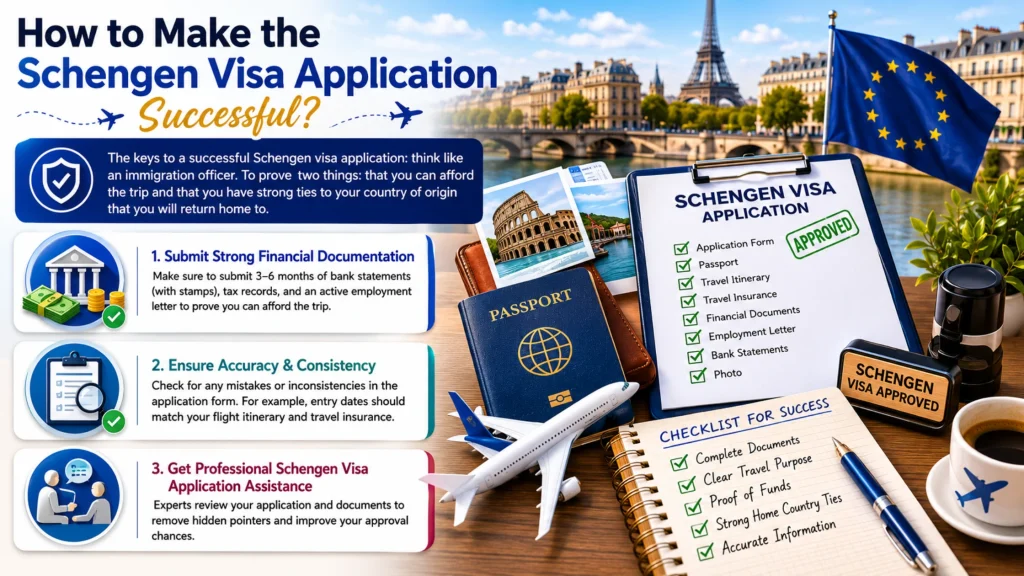
The keys to a successful Schengen visa application: think like an immigration officer. To prove two things: that the tourist can afford the trip and that you have strong ties to your country of origin that you will be able to return home to.
Make sure to submit strong financial documentation, such as 3-6 months of bank statements (with stamps), tax records, and an active employment letter, to ensure the Schengen visa application is successful.
Check for any mistakes or inconsistencies in the Schengen visa application form. For example, if the tourist is applying for a Schengen visa Italy, the entry dates in the application form should be exactly as specified by his/her flight itineraries and medical insurance.
Working with professional Schengen visa application services can be a great benefit if the applicant has a limited amount of time. The expert Schengen visa application services would review the application form and supporting documents to remove all the hidden pointers before the formal submission of the visa application.
What should be done next if the application is rejected?
Dont feel disheartened if the application is rejected The denial letter will indicate the specific reasons for denial, for instance, inadequate funds or an unconfirmed travel purpose.
- The applicant will have two options: they can lodge a formal appeal or correct all the mistakes and lodge a fresh visa application for the Schengen visa.
- If the applicant plans to repeat the process, consider it a new beginning. Through a detailed Schengen visa application letter, directly address the officer’s first suspicions with new, verifiable evidence.
- If the applicant has a Schengen visa application pending from the USA, check that the valid period of the legal residency in the USA is valid for a longer time than the planned return date.
- When the applicant has previously rushed through an application form PDF for a visa to Schengen, take the time to use the official Schengen visa application form online system to make sure that the data provided is clear.
- The longer the Schengen visa application time buffer, the more time the applicant would have to create for a perfect application file.
Conclusion
Going on a tour of these wonderful and varied countries in Europe is a rewarding experience that is worth the trouble of dealing with the initial paperwork. At a quick look, the application procedure for a Schengen visa might appear complicated; however, the process can be extremely achievable for anybody willing to take the time. At a glance, the application process for a Schengen visa may seem complicated, yet it is actually entirely achievable for any person willing to take the time. With the paperwork perfectly aligned, staying updated with the online systems of the Schengen visa application and choosing the proper center for the biometrics, the applicant can move on with full confidence.
FAQs
Apply for a Schengen visa from the US, starting with the country you are visiting first (or the country where you will spend the most days). Schedule an appointment with their authorized visa contractor (e.g., VFS Global or BLS International) and go for an in-person interview to give your biometrics.
Yes, but it also depends on your citizenship, not your residence in the U.S. If you need a visa to enter the Schengen Area with your passport, you will need a Schengen visa to travel to the Schengen Area, even if you are a U.S. Green Card holder.
The standard processing time for a Schengen visa is 15 calendar days from the date of receipt of your complete application by the embassy or consulate. But this can take up to 30-45 days during peak seasons or for more complex cases.
The Schengen visa processing times in the USA (and the rest of the world) are universal at 15 days. The same 15-day wait time, therefore, generally applies to non-citizen U.S. residents and/or Green Card holders as well.
Getting a Schengen visa is moderately hard. The global rejection rate is about 15 percent, not as strict as a US or UK tourist visa but does require meticulous documentation. The secret to success is impeccable paperwork and the destination you choose, plus evidence of strong ties to your home country.
Read More: –